Photo Credit: Originally published in Drum Magazine, courtesy of Pam Friday-Faulkner
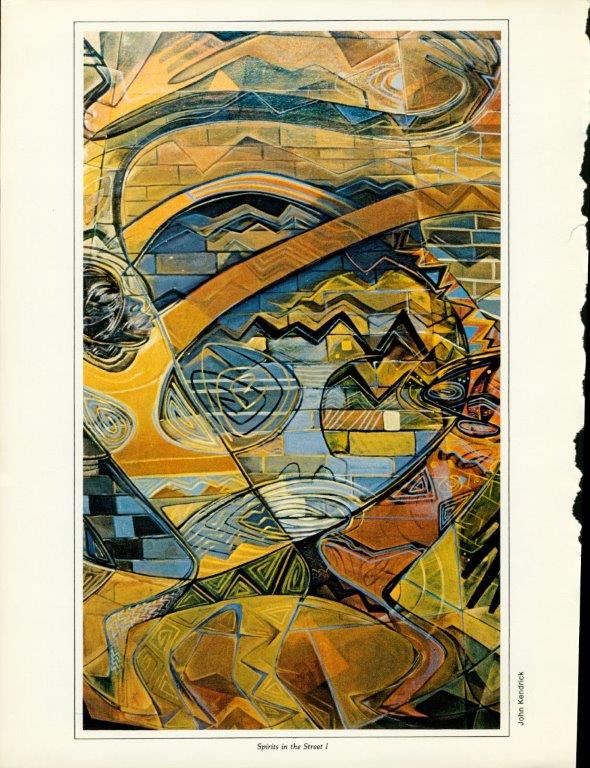
Description:Spirits in the Street featured two or more dancing figures. Perhaps influenced by the work of Nelson Stevens, this mural balanced between figurative representation and absolute abstraction. Geometric shapes in yellow and orange invoked the warmth of the sun in daytime.
Photo Credit: Photography printed in 1977 issue of Drum Magazine (Volume 7, Number 3)
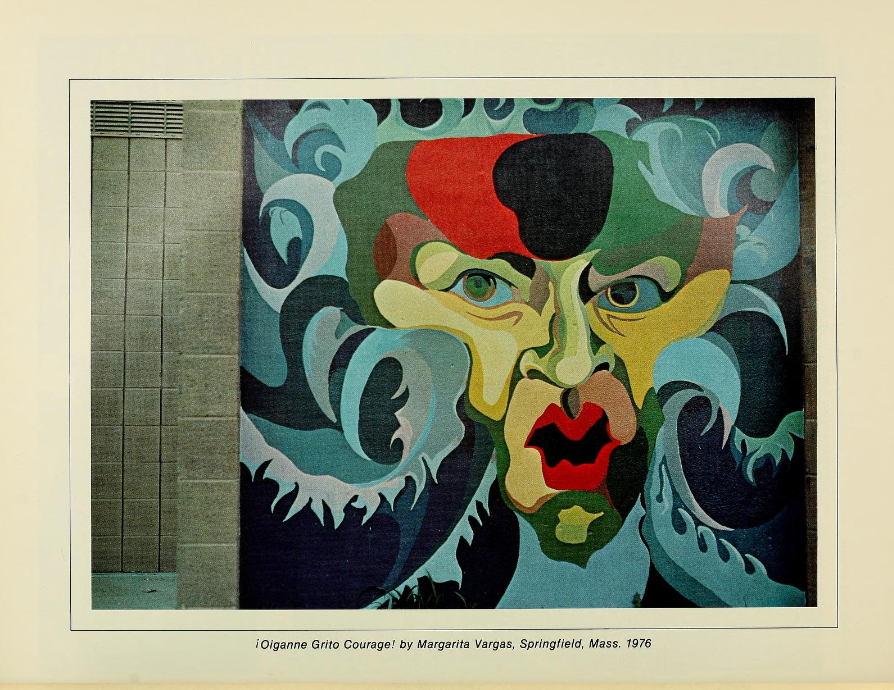
Description: This mural was painted by student and one-time editor of the University of Massachusetts Amherst’s Drum Magazine, Margarita Vargas. During his time as a professor, Nelson Stevens supervised numerous issues of the Black literary publication, including contributing his own artwork and words. In addition to covering campus news and the artistic accomplishments of students, Drum Magazine reported on politics and injustices around the world. This vibrant mural, depicting a stylized face, is titled Oiganne Grito Courage! and celebrates those who speak out.
Artist(s): Pamela Friday-Faulkner and Margarita Vargas
Original Location: Unknown
Date Painted: circa 1977
Visible Today?: No
Photo Credit: Photograph printed in 1977 issue of Drum Magazine (Volume 7, Number 3).
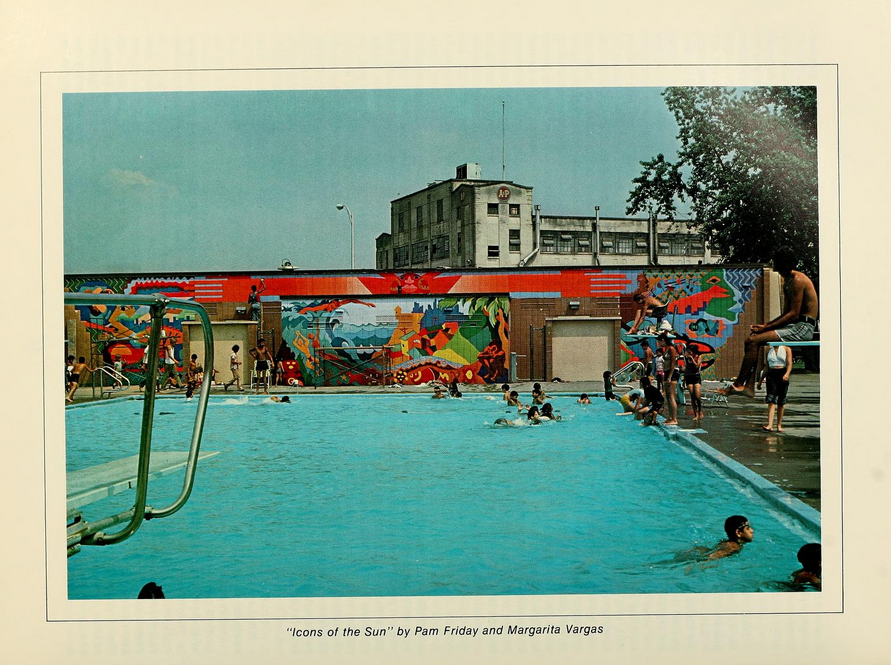
Description: The mural Icons of the Sun added vibrancy and beauty to an everyday setting: a public pool that, unfortunately, no longer exists. The mural was designed and executed by two of Nelson Stevens’ students, Pamela Friday-Faulkner and Margarita Vargas. While Friday-Faulkner worked on the left and right sides of the mural, Vargas painted the richly layered landscape in the center. For both students, mural painting offered an opportunity to explore and honor their heritage. In creating this mural, Vargas looked to the landscape and culture of Puerto Rico while Friday-Faukner was inspired by African and African American art. Stevens and his students were proud of mural projects like this one, which involved their communities and enhanced public spaces. As Friday-Faulkner recalls, “what was really interesting […] was the community interaction—people would stop by and comment or chat.”
Photo Credit: Photograph printed in 1977 issue of Drum Magazine (Volume 7, Number 3)
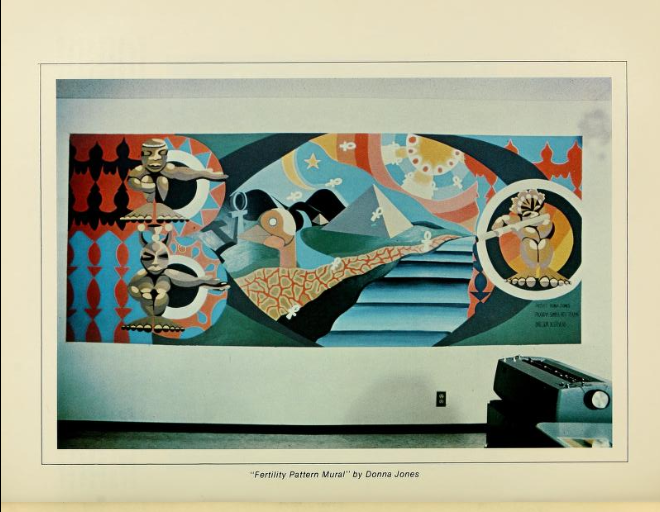
Description:Fertility Pattern, painted in an unknown interior location, was executed by student artist Donna Jones under the direction of Nelson Stevens. The mural features examples of the ankh symbol, an Egyptian cross surmounted by a loop that signifies eternal life and protection. The ankh was a recurring motif throughout Stevens’ work and in works by other members of the AfriCOBRA collective. Stevens incorporated ancient and contemporary African imagery into his paintings and encouraged his students to explore heritage and history through the creation of Afrocentric artwork. By contributing to the creation of a distinctly Black aesthetic, Stevens and his students emphasized the importance of the African diaspora’s cultural inheritance.